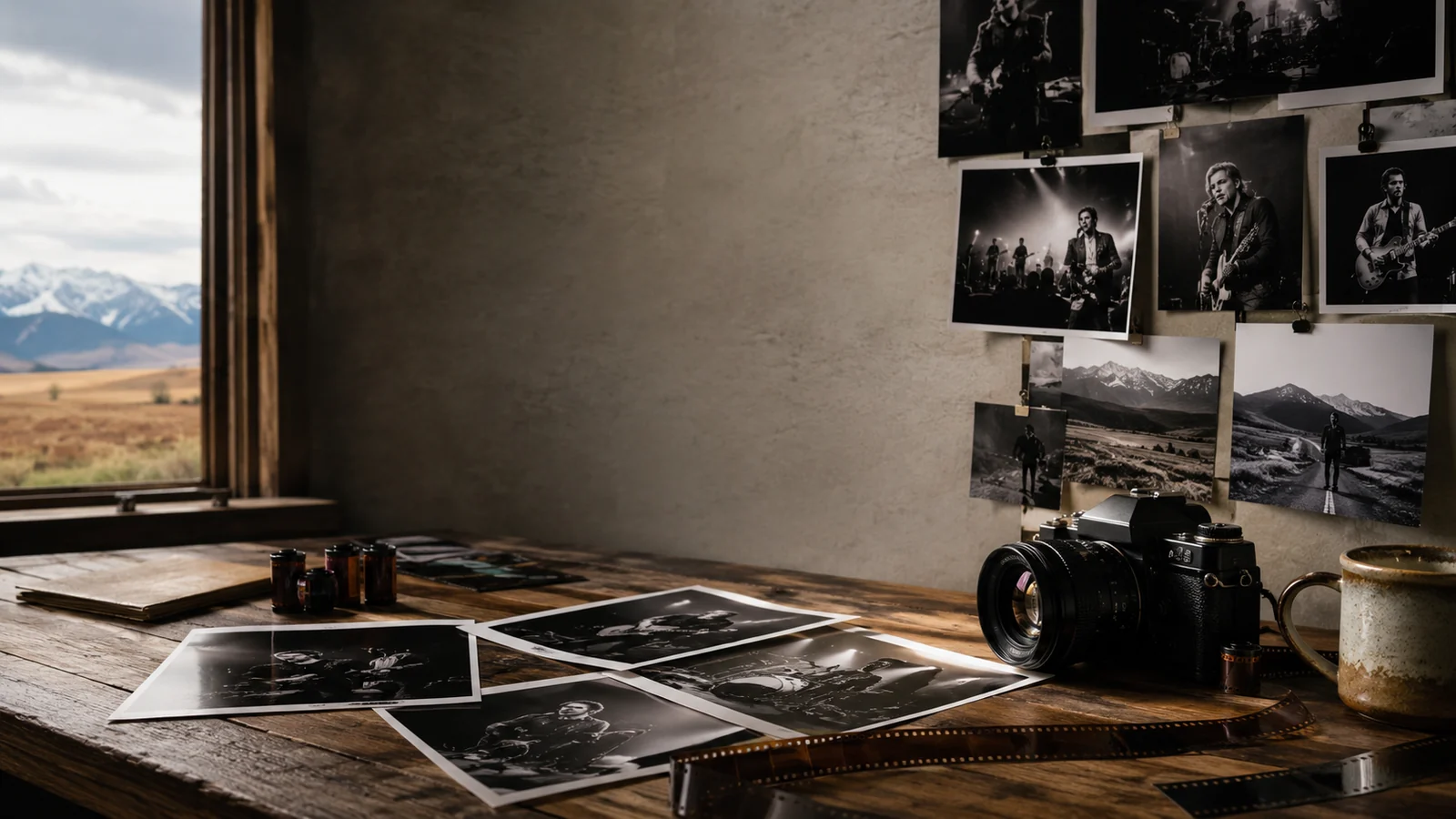
Photos And Memories
Explore live-performance imagery, travel scenes, memorabilia, and visual themes connected with the band.
Montana roots · country rock · bluegrass
Mission Mountain Wood Band grew from Montana roots into a group remembered for an energetic blend of country, bluegrass, folk, and rock. Formed in 1971, the band became closely associated with the state’s live music culture while developing a sound that could move from acoustic picking to a full, road-tested country-rock drive.
The story begins in western Montana, where musicians with different backgrounds found common ground in harmony singing, string-band traditions, and the expanding country-rock sound of the early 1970s. Rather than staying inside a single genre, the group built its identity around contrast. Banjo and acoustic textures could sit next to electric guitar, drums, and arrangements designed for larger stages. That flexibility became one of the most recognizable parts of the band’s musical character.
Montana remained more than a place name in the group’s story. The landscape, road culture, college-town energy, and strong regional live-music circuit all contributed to the way the band was perceived. Songs such as “Big Sky Country Sun” and “Mountain Standard Time” reinforced that connection, while touring carried the group beyond its home state and introduced its music to audiences around the country.
Rob Quist is closely identified with the band’s formation and later musical activity, and the group’s history also includes Steve Riddle, Terry Robinson, Christian Johnson, and Greg Reichenberg. Their shared journey is central to the Montana PBS documentary Never Long Gone: The Mission Mountain Wood Band Story, which follows the personalities, music, touring, and experiences that shaped the group.
The lineup changed over time, as many working bands do, but the underlying identity stayed connected to ensemble playing rather than a single instrument or style. Vocals, rhythm, fiddle, banjo, guitars, and a strong live-performance sensibility all contributed to a sound that could feel informal and rootsy one moment, then broad and stage-ready the next.
Explore The Band History And Members →
The band’s recorded catalog provides the clearest way to hear how those influences came together. In Without Knockin', released in 1977, includes songs that continue to define the group’s identity, including “Sweet Maria,” “Mountain Standard Time,” “Big Sky Country Sun,” “In the Country,” “Morning Red,” and the title track. Later releases such as Reboot and Now & Then show how the repertoire and musical relationships continued across different periods.
Another important part of the catalog is Private Stash, a multi-volume collection that gathered recordings from different years and locations. Its scope makes it useful for understanding the band not only as a recording act but also as a touring group whose songs developed in front of live audiences.
Explore The Music And Discography →
Touring was a major part of the band’s identity. The group played clubs, campuses, festivals, and larger venues, building a reputation through repeated live appearances rather than relying only on studio releases. That road experience helps explain why so much of the band’s story is tied to concert memories, photographs, posters, travel, and performances remembered by audiences decades later.
The events section follows those touring years, notable appearances, reunions, and the way live performance connected the group to communities both inside and outside Montana.
Explore Concerts And Past Events →
The visual record adds another layer to the music. Photographs capture changing lineups, instruments, venues, road life, and the informal moments that surround a working band. Video footage preserves stage movement and performance energy, while contemporary reviews and later retrospective coverage show how the group was described by writers, fans, and other musicians.
Explore live-performance imagery, travel scenes, memorabilia, and visual themes connected with the band.

Open selected performance footage and song videos through their original YouTube pages.

Read about reviews, media coverage, promotional material, and the group’s wider reputation.
The band’s significance is easiest to understand as part of a broader Montana music story. Its career connects college-town creativity, regional touring, country and bluegrass traditions, rock-era experimentation, and the practical realities of taking a band on the road. That combination gives the group a place in both local memory and the wider history of independent American roots music.
This site brings those parts together in one place: the people, recordings, songs, performances, photographs, video, and stories that define Mission Mountain Wood Band. From here, each section goes deeper into a different part of that musical history.
New listeners can approach the band from several directions. For a compact introduction, start with In Without Knockin' and the songs that remain most visible on current streaming services. For the story behind the music, move to the band history and the Montana PBS documentary. For a sense of how the group actually worked, the concert, photo, and video pages bring the touring years into focus.
Longtime listeners may prefer to begin with Private Stash, reunion material, or specific songs tied to personal memories. The site is structured so those paths connect rather than compete: albums lead to songs, songs lead to performances, performances lead to people and places, and those people and places return to the larger Montana music story.
Mission Mountain Wood Band represents a type of musical career that developed through persistence, community, and live work. The group came from outside the major recording centers, built a following through travel, and created a catalog strongly connected to where the musicians came from. That makes the story relevant not only to fans of the band, but also to anyone interested in regional American music and the way local scenes can produce artists with a much wider reach.